All About Court Coverage: Essential Insights for Legal Professionals
Court reporting offers as a crucial part of the lawful system, making certain that procedures are precisely recorded. As innovation developments, the roles and devices of stenotype reporter are evolving. This makeover requires lawyers to adjust to brand-new techniques and technologies. Understanding the intricacies of court reporting can considerably influence case results. What important understandings should lawful experts grasp to browse this changing landscape efficiently?
The Duty of Court Reporters in Legal Procedures
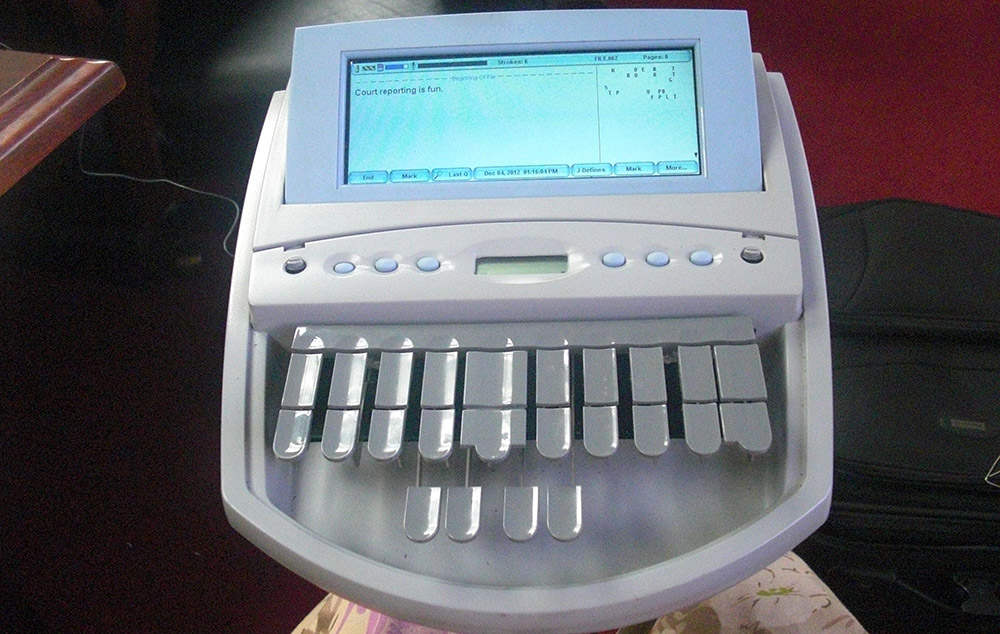
Stenotype reporter function as the vital voice of the court room, capturing every spoken word throughout lawful process with accuracy and accuracy. They transcribe statements, legal disagreements, and courts' judgments, ensuring that a complete record is preserved. This paperwork is essential for appeals, offering a clear account of what taken place throughout hearings and tests. Stenotype reporter must possess extraordinary paying attention abilities and a detailed understanding of lawful terms to facilitate accurate reporting. They frequently work under pressure, requiring concentration and speed to keep pace with the dialogue. Their transcripts act as official records, which can be referenced long after the proceedings conclude. In addition to their transcription duties, stenotype reporter may also provide real-time coverage, permitting lawyers and courts instant accessibility to the spoken word. In general, their role is essential in supporting the integrity and transparency of the judicial procedure, adding significantly to the legal profession.

Innovation Transforming Court Reporting
As modern technology developments, the landscape of court reporting is undertaking a significant change, improving the performance and accuracy of lawful documentation. Digital tools such as real-time transcription software program enable stenotype reporter to supply immediate text result during procedures, enabling lawful professionals to gain access to details instantaneously. Additionally, remote coverage capacities have actually emerged, helping with engagement from numerous locations through protected video clip conferencing systems.
Expert system is additionally making strides, with formulas qualified of assisting in transcription processes and guaranteeing higher precision in capturing spoken discussion. Furthermore, cloud storage space solutions provide secure access to case files, streamlining collaboration in between lawyers and stenotype reporter.

These technological technologies not just enhance process but also lower the possibility for human mistake, eventually contributing to an extra efficient legal system. The integration of advanced modern technology right into court reporting is setting new standards for accuracy and performance in legal documentation, mirroring the progressing demands of the career.
Finest Practices for Collaborating With Court Reporters
Reliable partnership with court reporters is essential for ensuring timely and exact legal documents. Lawyers must start communication early, giving reporters with pertinent situation information, including names, days, and particular terms. This foundational details allows press reporters to prepare efficiently, lowering the possibility of mistakes.
Additionally, keeping open lines of communication throughout proceedings promotes an effective environment. When required, lawful professionals ought to urge court reporters to ask concerns or seek explanation. This method not just enhances precision however additionally enhances the functioning relationship.
Reviewing records without delay is vital. Attorneys ought to give constructive comments to press reporters, highlighting any disparities or areas for improvement. This collaborative method assists reporters fine-tune their assurances and skills future work satisfies the needed requirements.
Appreciating due dates and acknowledging the reporters' proficiency contribute to a effective and positive partnership, eventually benefiting the whole lawful procedure.
Understanding Different Sorts Of Court Reporting Providers
Different sorts of court reporting solutions cater to different lawful demands, each offering one-of-a-kind advantages and performances (durham court reporting). Traditional stenographic reporting is one of the most typical method, utilizing a clerk who transcribes talked words into written message during court proceedings. This solution offers real-time transcripts, making it possible for instant accessibility to procedures
Another alternative is electronic reporting, which employs audio recording modern technology together with transcription services. This method can be a lot more cost-efficient and is helpful for recording prolonged sessions where verbatim text is not instantly called for.
Furthermore, some solutions focus on remote or digital coverage, accommodating circumstances where participants can not be physically present.
CART (Interaction Accessibility Realtime Translation) services use real-time transcription for people with hearing impairments, making sure accessibility during lawful process. Each type of court coverage solution plays a vital duty in the legal procedure, boosting communication and paperwork.
The Future of Court Coverage in the Lawful Market
While improvements in modern technology proceed to reshape lots of sectors, the future of court coverage in the legal industry is poised for see this considerable improvement. durham court reporting. The raising integration of expert system and automatic transcription services is expected to improve effectiveness and accuracy in court reporting. These tools can improve the paperwork process, allowing lawyers to concentrate on even more facility jobs
Remote court coverage has gained traction, particularly in response to the COVID-19 pandemic. Virtual hearings this article and depositions are likely to end up being commonplace, requiring stenotype reporter to adjust to new technologies and systems.
As the need for real-time reporting and instant accessibility to transcripts expands, stenotype reporter will require to refine their skills in electronic literacy and information monitoring - durham court reporting. The progressing landscape tests both provides and opportunities, inevitably redefining the function of court reporters within the legal industry. Welcoming these modifications will be vital for maintaining relevance and delivering top quality solution
Often Asked Questions
What Certifications Do Court Reporters Need to Exercise Skillfully?
Court reporters typically require a high institution diploma, specialized training in court coverage, and certification. Effectiveness in stenography or voice writing, along with solid language skills, is necessary for accurate transcription in lawful settings.
Just How Much Do Court Reporting Solutions Normally Price?
Court reporting solutions typically cost between $100 to $300 per hour, depending on elements such as experience, place, and intricacy of the situation. Extra costs might look for transcription and expedited services.
Can Court Reporters Operate In Non-Legal Settings?
Yes, court reporters can operate in non-legal setups, such as shut captioning for tv, transcription solutions for meetings, and creating subtitles for video clips. Their abilities in exact documentation are useful in different markets.
What Is the Typical Turnaround Time for Records?
The typical turnaround time for transcripts generally ranges from 24 hr to a week, depending upon factors such as the size of the process, intricacy, and the stenotype reporter's workload. Timeliness is essential in lawful setups.
Do Court Reporters Offer Services in Numerous Languages?
Court press reporters can provide services in numerous languages, depending find upon their qualifications and know-how. Many are trained to record in numerous languages, enhancing access and ensuring exact documentation in varied legal process across various linguistic histories.
Court press reporters serve as the vital voice of the court, recording every talked word throughout legal proceedings with accuracy and precision. Court reporters must have extraordinary listening skills and a thorough understanding of lawful terminology to assist in accurate reporting. Digital devices such as real-time transcription software make it possible for court reporters to provide prompt text outcome during procedures, permitting legal experts to accessibility info immediately. Different kinds of court reporting services provide to various legal requirements, each offering one-of-a-kind benefits and performances. Court press reporters usually require a high institution diploma, specialized training in court coverage, and accreditation.
Comments on “Methods durham court reporting enhances the Integrity of Trials”